The Name Behind Lev Aharon
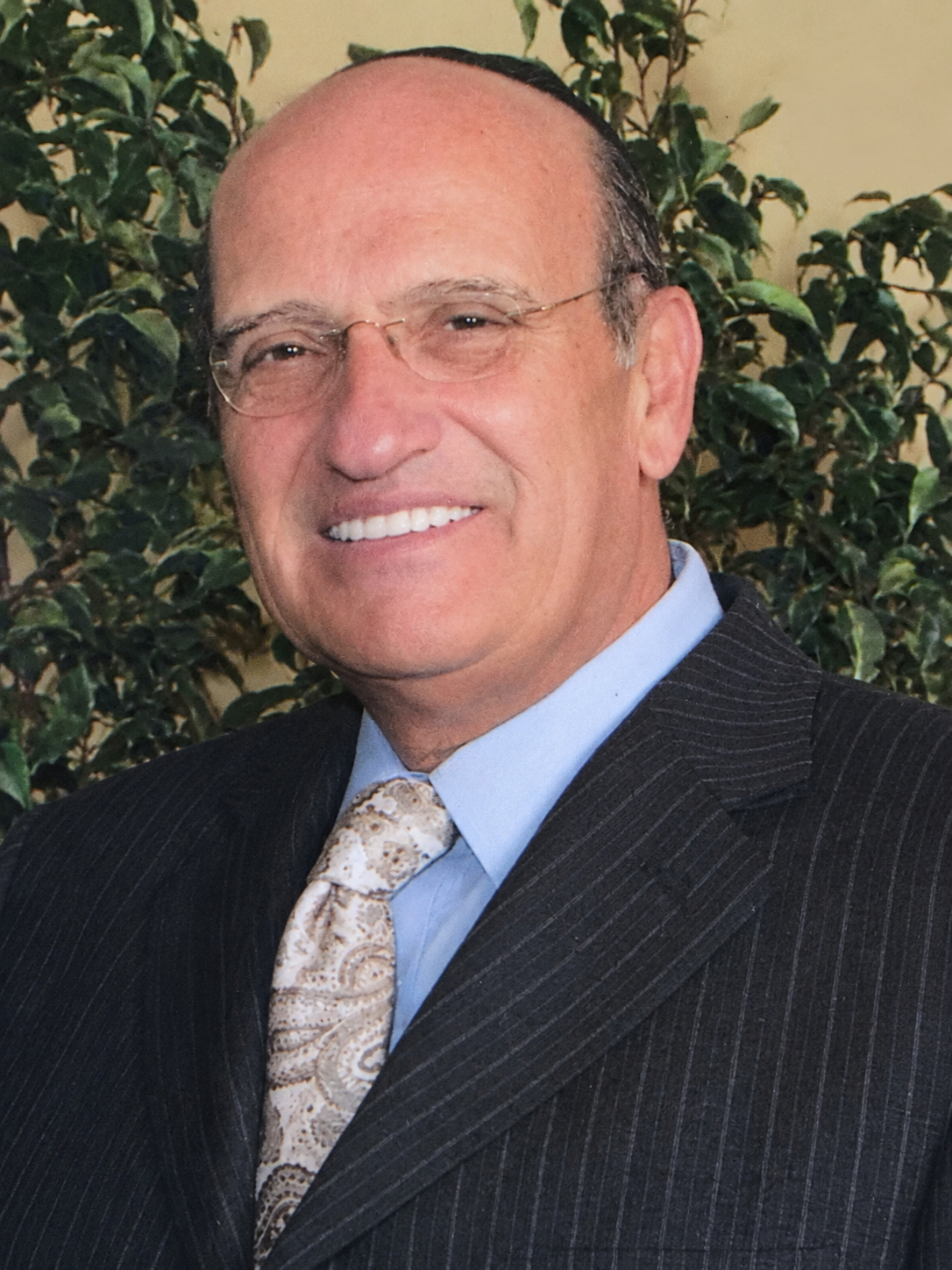
Rabbi Aharon Laniado a”h
Yeshivat Lev Aharon was founded in memory of Rabbi Aharon Laniado a”h, father of the Rosh Yeshiva, Rabbi David Laniado. The yeshiva carries his name — and tries, every day, to carry his heart.
My Father, R' Aharon Laniado z"l
The Heart Behind Lev Aharon
When people ask me why I named the Yeshiva Lev Aharon, the answer is very simple. My father, R' Aharon Yosef Laniado z"l, was not merely someone whose name I wanted the Yeshiva to carry. In many ways, the values upon which Lev Aharon was built came directly from the way I watched my father live his life.
My father was born in Jerusalem into a family steeped in Torah and an extraordinary Sephardic heritage. His father, Chacham David Laniado z"l, was a descendant of the great rabbinic dynasty of the Laniado family of Aram Soba, Aleppo, a family that produced generations of distinguished Chachamim and Torah scholars. But if I had to choose the one word that defined my father, it would be giving. My father loved to give. More than that, he lived to give.
His life took him on an unusual journey. As a young man in Israel, he served in the army and later spent time working in Israeli security. Eventually he married and moved to the United States. Those early years were not easy financially. He worked hard, including traveling throughout America selling watches, and at one point suffered a serious automobile accident. Later, while still a relatively young man, he suffered a heart attack. Eventually, Hashem placed him in a very different position. My father developed a close relationship with the Nakash family, founders of Jordache, and became deeply involved in their business. Over the years, he rose to a position of tremendous trust and responsibility. But what mattered most to him was not the title he held or the success he achieved. What mattered to him was what he could do for other people. He became deeply involved in distributing tzedakah and helping Torah institutions, families and individuals in need. Over the course of his lifetime, approximately $100 million in charitable funds passed through his hands. Yet despite dealing with such enormous sums, he was extraordinarily careful about every dollar entrusted to him.
There is one story about my father that, to me, captures who he really was. Years before he had access to significant charitable funds, my father learned about a Jew who desperately needed money for open-heart surgery. My father did not have the money to pay for it himself. So he went from door to door and collected until he had raised what was needed. Many years later, he happened to meet that man again. The man told him that there was someone for whom he prayed every single day: Aharon Yosef ben Mazal, the man who had helped save his life. My father realized that the man was speaking about him. That was my father. His chessed did not begin when there was money. The money simply allowed him to do on a much larger scale what had always been in his heart.
And his love for chessed was matched by an extraordinary Ahavat HaTorah. My father had tremendous respect for Torah and for those who devoted their lives to learning it. Chacham David Yosef once recalled that my father came to visit him while the Rav was deeply immersed in a difficult Torah question. Chacham David apologized that he could not properly give him his attention. My father could not understand the apology. To him, having the privilege of sitting there and watching a Talmid Chacham immersed in Torah was itself an honor. He told the Rav to continue learning and not to interrupt on his account. That was the combination that defined him: Torah and chessed.
He loved helping people. He loved seeing another Jew happy. He loved knowing that a struggling family had food for Yom Tov, that someone who was down could get back on his feet, that a Torah institution could continue functioning, or that another person could simply breathe a little easier because someone cared. And he did not only give money. He gave people confidence. He gave encouragement. He gave compliments. He gave people his time and attention. He wanted another person to walk away feeling better than he had before meeting him.
That lesson became deeply embedded in me. When I founded Yeshivat Lev Aharon in 2005, I wanted to build a Yeshiva around that same idea. A boy who walks through our doors is not a number. He is not simply another student who needs to attend classes and pass through a program. He is a neshama entrusted to us. If you saw someone desperately in need of physical help, you would never simply walk past him. How much more so when a young man needs someone to believe in him, guide him, strengthen him, teach him Torah and help him discover what he is capable of becoming. That is the Lev of Lev Aharon. It is the heart I saw in my father.
My father passed away on 25 Shevat, but the lessons he taught us continue every day. When a Rebbe gives extra time to a boy who is struggling, when a student discovers a love for Torah that he never knew he had, when someone in our Yeshiva notices another person's needs and chooses to help him, my father's legacy is alive. I did not name the Yeshiva Lev Aharon simply so that my father's name would be remembered. I named it Lev Aharon because I wanted his heart to be remembered. A heart filled with Torah. A heart filled with chessed. A heart that understood that whatever Hashem gives a person — his abilities, his resources, his relationships, his time — is ultimately given to him so that he can give to others.
That is the legacy of my father, R' Aharon Yosef ben Mazal Laniado z"l. And that is the legacy we hope to pass on to every young man who enters the doors of Yeshivat Lev Aharon.